
Feature
Drugmakers fortify supply chains ahead of obesity pill boom
Eli Lilly and Novo Nordisk are confident they can avoid shortage pitfalls seen in the injectable sector. Robert Barrie explores.
Main video supplied by celafon/Creatas Video+ / Getty Images Plus via Getty Images
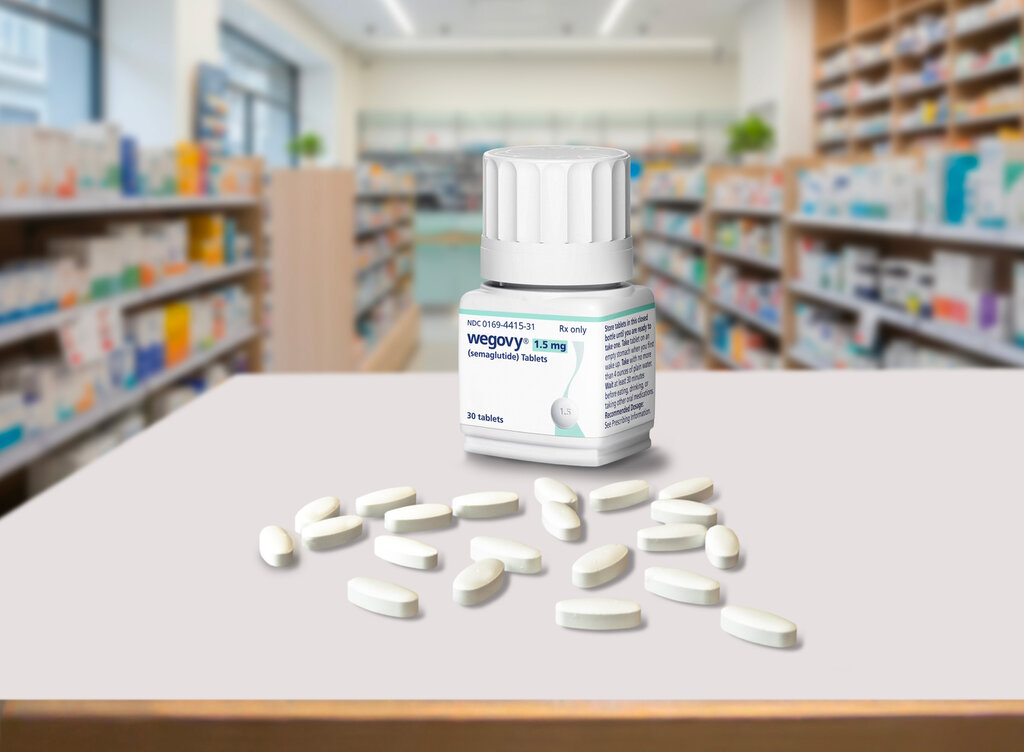
Patients taking Novo Nordisk’s oral Wegovy report weight loss comparable to the injectable version, with the added benefit of the pills’ ease of administration.
“Taking a pill every day is so easy. The timing of it is great – it allows for some semblance of schedule,” one patient on a Wegovy (semaglutide) forum tells Pharmaceutical Technology Focus.
In January 2026, Novo became the first company to market a glucagon-like peptide-1 receptor agonist (GLP-1RA) pill for weight loss in the US. While the injection has a slightly higher average weight loss, experts generally consider the difference minor.
Eli Lilly followed suit just three months later, gaining US Food and Drug Administration (FDA) approval for Foundayo (orforglipron) in April. While GLP-1RA injectables have a slightly higher average weight loss, experts generally consider the difference minor.
Both companies have therefore ushered in a new paradigm for weight loss treatment, offering patients a more convenient option compared to weekly injections. With the oral GLP-1RA market set to boom, both Novo and Lilly are acting to ensure they can meet the demand.
A new era of obesity drugs
Pills are generally considered easier to produce than injectables, but supply chain logistics are far from straightforward. The manufacturing processes also differ between Wegovy and orforglipron given their chemical makeup.
“Injectables require cold storage, sterile fill-finish manufacturing, as well as specialised auto-injector device assembly,” explains senior analyst Shehroz Mahmood at GlobalData, Pharmaceutical Technology's parent company. “Oral formulations on the other hand eliminate these and use conventional tablet manufacturing infrastructure, which is simpler and abundant."
“However, oral peptide GLP-1s still require certain elements that adds its own supply complexity. This is not the case for orforglipron which is a small molecule. This means it needs conventional oral tablet manufacturing, capacity which Lilly can access far more readily and quickly than biologics fill-finish.”

What is also unique about GLP-1RAs is the unprecedented market size.
What is also unique about GLP-1RAs is the unprecedented market size. Since the US Food and Drug Administration (FDA) approval in December 2025, demand for oral Wegovy has been high. Novo Nordisk confirmed in its 2025 earnings call that there had been 50,000 prescriptions for the pill by the end of January 2026. Analysis by GlobalData, Pharmaceutical Technology’s parent company, identifies the Wegovy pill as a key growth driver for Novo between 2026 and 2031.
Orforglipron’s future also points to a lucrative revenue stream. GlobalData currently forecasts that orforglipron, if approved, will generate sales of $13bn in 2031. However, this number could significantly shift based on the potential for pricing reforms, which would further expand its reach.
“It is difficult to forecast demand, but we have seen strong uptake with the Wegovy pill already, courtesy of some clever marketing strategies by Novo. Physician familiarity will definitely play a role, and I anticipate there will be steady demand for these therapies, boosted by dynamic switching between injectables and pills,” says Mahmood.
At the J.P. Morgan Healthcare Conference, Novo advertised its Wegovy pill on vehicles around the venue. Wrapped in decals, some cars circulating around San Francisco’s Union Square declared “the pill is here”.
Speaking at the conference, Novo Nordisk CEO Maziar Mike Doustdar said: “We need to meet patients where they are. And the best example of that is the recent launch of the Wegovy pill.”
“Because the other thing that we have realised is that we need to expand the market. Right now, we are being judged how many patients are being switched between us and Eli Lilly,” he added.
Facilities both old and new
Both Novo and Lilly have significant global manufacturing footprints. The limits of these facilities were tested to the extreme during the rise of the injectable GLP-1RA market.
Production hubs struggled to keep up with demand, creating widespread shortages of Wegovy and Lilly’s tirzepatide, known under the brand name Zepbound for obesity. This created a duality in the obesity market, with many patients pivoting to compounded versions of the drugs, eroding the pharma companies’ market shares.
With the oral obesity drug market set to provide significant revenue streams over the next decade, neither Novo nor Lilly are taking their chances this time round.
In March 2026, Novo invested €432m ($501m) to upgrade its facility in Ireland to ensure the drugmaker can meet the anticipated high demand. The expansion of the 45-acre tabletting facility in Monksland, Athlone is expected to be completed by 2028, though construction has already begun.
Novo is in a far more stable supply chain position compared to the pre-GLP era. The drugmaker acquired CDMO Catalent for $16.5bn in December 2024, simultaneously taking over three manufacturing sites in the US, Belgium, and Italy.
A Novo Nordisk spokesperson tells Pharmaceutical Technology: “We have a strong, reliable supply of Wegovy pill. We planned ahead, and over the years have made significant multi-billion-dollar investments in building production capacity.”
Last year, Novo bolstered its US footprint via a $4.1bn commitment to its North Carolina site – the facility there is the main producer of oral Wegovy in the country. Novo, which has pledged $10bn in total to strengthen its domestic footprint, has promised President Trump to make the Wegovy tablet end-to-end in the country.
The spokesperson adds: “The active ingredient in Wegovy pill is produced from end-to-end in North Carolina – made by Americans for Americans. We are confident and ready to meet demand so patients can count on timely access to the drug.”
We are confident and ready to meet demand so patients can count on timely access to the drug.
Despite orforglipron’s more straightforward manufacturing, Lilly’s outlaid even more funds. Earlier this month, Lilly announced the last of four new manufacturing facilities it plans to construct in the US as part of a $27bn investment drive. At least three of these have been confirmed as production hubs for weight loss therapies such as orforglipron. There is also the $1.2bn expansion of a facility in Puerto Rico that will further boost the drug’s production on American soil.
The US big pharma company has also shored up its European base too. A $3bn investment into Lilly’s Netherlands’ facility is slated to increase the production capacity for oral medications and orforglipron will be amongst the medications produced at the site.
A Lilly spokesperson told Pharmaceutical Technology: “Lilly has been making substantial investments to meet anticipated demand at launch, subject to receiving regulatory approvals. Since 2020, we’ve committed more than $55 billion globally to grow our manufacturing capacity.”
Part of this outlay is ensuring that capacity in the Eastern hemisphere is fortified. Lilly has invested $3bn to bolster manufacturing capabilities in China through expansion of existing facilities and partnering with local CDMOs. While no official statistics are available, epidemiologists consider China to have the largest obesity market after the US. Lilly submitted an application for orforglipron for the treatment of type 2 diabetes and obesity to China’s National Medical Products Administration (NMPA) at the end of 2025.
The Lilly spokesperson adds: “Orals are generally easier to manufacture and distribute which lends itself to global scaling. This would further Lilly’s mission to reduce chronic diseases like obesity, which impacts over one billion people globally.”
Eli Lilly has also already started to assemble a stockpile of its oral weight loss drug orforglipron. In its 2025 annual report, published in February 2026, Eli Lilly said it has pre-launch inventory capitalised at $1.5bn, most of which is related to orforglipron. Stockpiling medicines before approval is a common strategy in pharma, but the buildup of inventory here is clearly a sign of preparedness before the drug enters the vast cardiometabolic market.
Credit: oleschwander / Shutterstock.com
Mahmood says: “Building this stockpile represents a decisive effort to avoid repeating the supply constraints that plagued its Mounjaro and Zepbound rollouts. This substantial build of inventory signals management's confidence in regulatory approval and their determination to execute a robust global launch.”
Direct-to-consumer offerings on the rise
The strengthening links between weight loss drugs and direct-to-consumer (DTC) could likely change the way demand is mediated. These channels, such as Novo and Lilly’s online platforms, and TrumpRx, increase accessibility to drugs. The Wegovy pill, for example, is already far cheaper than its injectable counterpart at their respective launches. Its inclusion on President Trump’s DTC platform represents changing times in how US patients reach certain medications.
Amid legal overhangs, Novo Nordisk took a direct approach with Hims & Hers, forming a partnership that will see the telehealth company offer oral Wegovy. By the end of 2025, Hims & Hers had a base of more than 2.5 million members – signalling the reach that DTC channels have.
Overall, however, Novo and Lilly’s sizeable financial outlays mean having the infrastructure in place to meet demand. Additionally, given pills – especially orforglipron – are easier to produce, the companies are likely to avoid the supply pitfalls seen with injectables.
Novo’s spokesperson concluded by saying: “We have been investing in our manufacturing capabilities for years and are confident in our ability to meet supply needs.”
Mahmood ends by remarking: “Both Novo and Lilly have learnt their lessons from previous launches and have made necessary adjustments to avoid the previously experienced delays. Overall, Novo and Lilly's investments should meaningfully reduce shortage risk.”
